

This guest post is from Jim Trageser , a long-time Goto 10 reader. For more of Jim’s writing, be sure to check out his Substack, Lost in Cyberspace.
If you’re interested in writing for Goto 10, please get in touch.
— Paul
Dad was an electrical engineer. By training, by vocation. By how he saw the world.
Working for an Air Force contractor in the 1960s and ’70s, Dad designed (and had the patent for) the first air-collision avoidance system, as well as an early transonic airspeed indicator.
And with that background, it was little surprise to us kids when Dad started building a kit computer in our basement. It was a CMOS KIM-I - and by “kit,” I mean he sent them a check, and they mailed him a large blueprint schematic of how to build this early 6502-based computer.
He ended up adding an RF output so he could hook it up to a small 11-inch RCA TV, and a serial port he connected to a surplus Teletype.
After that, he bought us a Fairchild Channel F - the first videogame system to store game software on carts.
And that led to his buying an Atari 400 when they came out shortly after we moved to California. Originally, it just had a cassette drive - with the loud beeping to let you know it was still loading the program. I remember one of our first games was a Star Trek-based game (not licensed, I don’t think) in which you had to search different sectors for the Klingons.
After he added a floppy drive, I began spending my own earnings from flipping burgers on more and more games. One favorite was “Decathlon” by Activision.
It was never as popular as Epyx’ “Summer Games,” and with good reason: The 1,500 meter race was nicknamed “The Joystick Killer.” You had to keep rocking your joystick left and right and left again, continuously, to keep your player sprinting at full speed. It took 3.5 to 4.5 minutes to finish this game, by which time your hand was bruised and your arm numb.
But my siblings and I - and the neighboring kids - loved that game, because with 10 events total, it was one of the longer multiplayer videogames available in the early 1980s. And the graphics were decent.
But with those square, black Atari joysticks?
Brutal.
Even buying a Wico Command Control “batstick” joystick wasn’t a huge help. The challenge was with a multidirectional joystick, as your arm tired you would begin pushing the stick up or pulling it down, breaking the rhythm and slowing your player.
So Dad swung by an electronics surplus shop one day, and picked up a joystick from an old video game. A single-axis, two-directional joystick. It only moved left and right.
It had been removed from the cabinet of whatever game it was for, with its surrounding panel still attached, including two large red plastic buttons. It was about 4 inches deep by about 14 inches long; the joystick itself topped by a red metal ball for grabbing it. And it was definitely industrial strength.
Dad finished building a little case around it, put rubber feet on all four corners, and then wired it to an Atari joystick plug.
We’d plug that thing in only for “Decathlon” (and, later, for “Summer Games”) No more trying to hold the Atari or Wico joystick between our legs for stability: We just placed that bad boy on the table in front of the monitor, and suddenly that 1,500 meter race could be finished without blisters.
Dad later brought home some kind of weird controller that used embedded mercury tubes to detect changes in motion. It was black, covered in a soft plastic with a honeycomb pattern, and 5, 6 inches tall and maybe two inches wide. You held it straight vertical to start, then could control gameplay by tilting it in different directions. It had a single, small red button on top. Again, this was not an Atari joystick - it may have been an industrial controller from work, but Dad rewired it to work on the Atari. It was somewhat slow to react to changed positions, though, so while technically impressive it ended up being impractical for actually playing a game with.
And when we stopped playing the Fairchild Channel F in favor of the Atari 400, Dad even rewired one of the Fairchild joysticks to work with the Atari. They were notoriously fragile, though, and after awhile Dad got tired of taking it apart to re-solder the connections and retired it.
But maybe the most impressive bit of hardware customizing on that Atari 400 Dad did was when he bought a surplus Atari 800 keyboard, built a custom case for it, and then connected it to the Atari 400 by adding a Centronix 24-pin parallel cable. I’m not sure of the details on the 400 chassis itself, but I do remember it plugged in on the left-side of the case, where dad had cut a hole so he could put the serial connector on the motherboard.
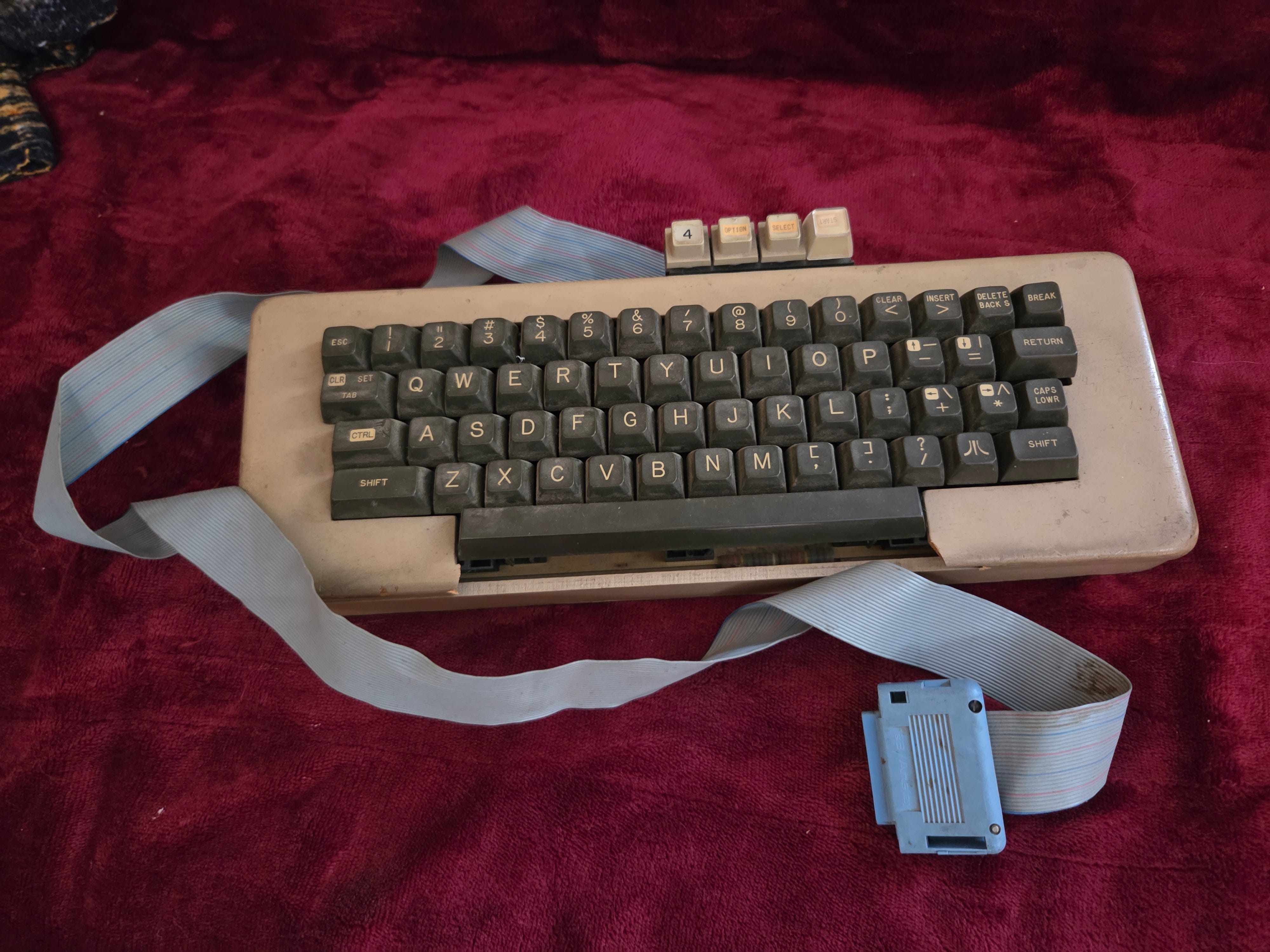
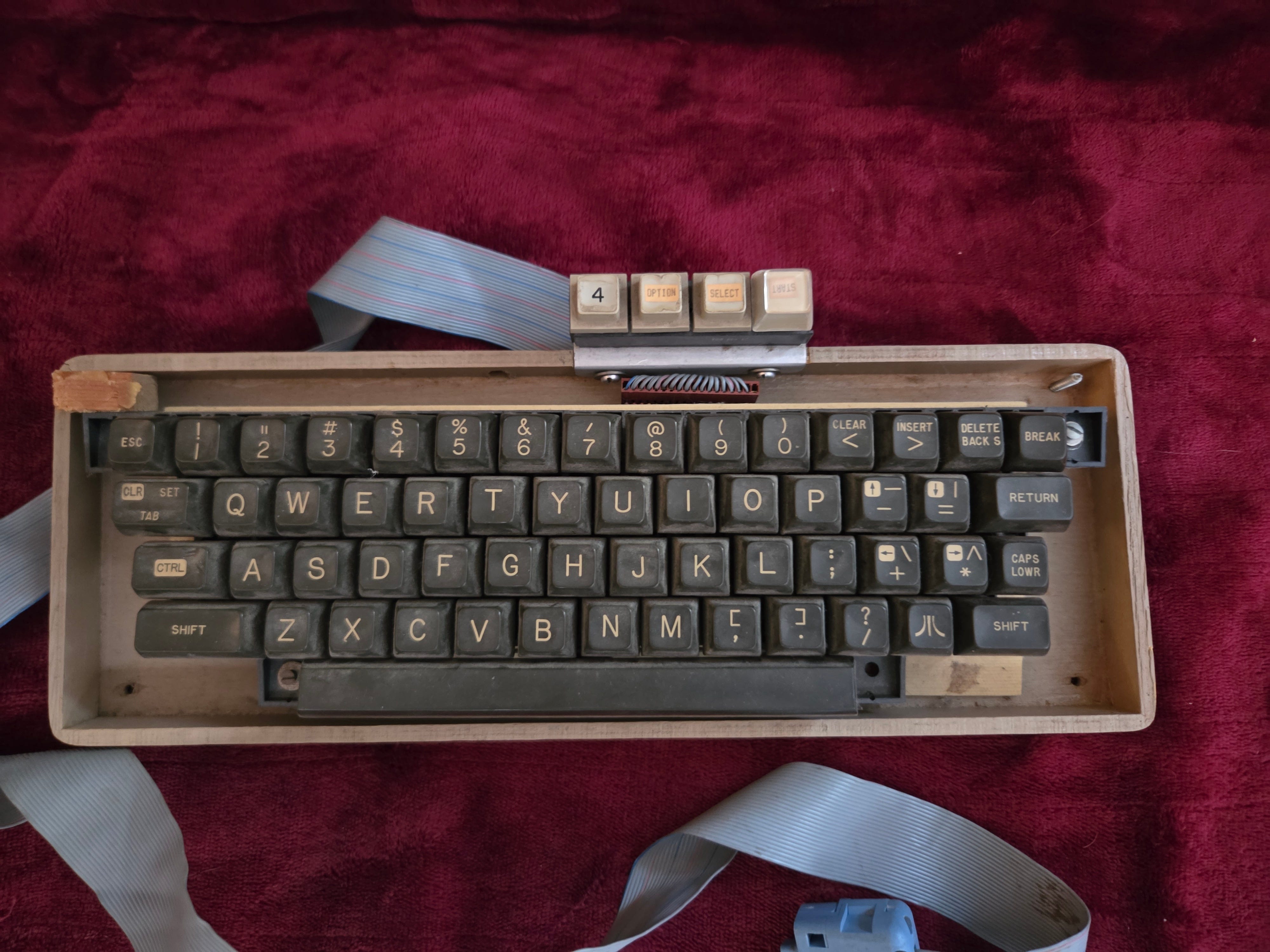
I used that to type most of my homework assignments the first couple years of college. Once Dad bought an ST, he sold me his 800.
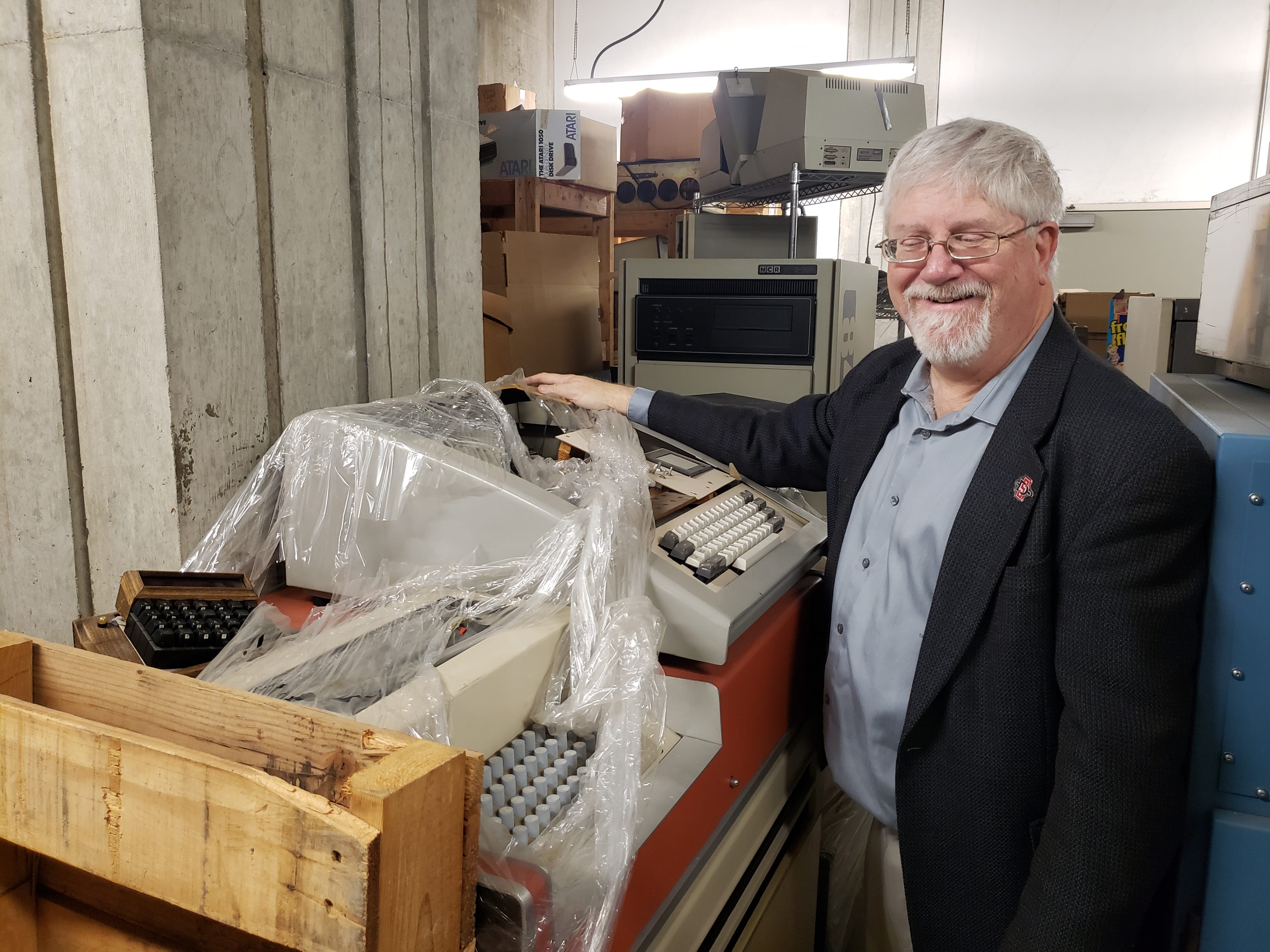
All of the above peripherals are in boxes somewhere in the old Computer Museum of America collection in storage at San Diego State University. If I run across them while I’m helping with the cataloguing of the collection, I’ll be sure to take photos.

The mercury stick was called "Le Stick" by Datasoft. And so funny you mention it after the decathlon game, as that was my secret weapon for that game - since the game just looked for left/right, you could shake the stick wildly and it would generate those inputs faster than you ever could with an actual joystick!