

Apple shipped the first release of Mac OS X on March 24, 2001. It’s hard to believe that was 25 years ago!
I don’t usually write about such recent topics1, but 25 years is a long time and Mac OS X was a Big Deal. It was a big deal to me personally because I got my first Mac in 2001 shortly after the release of Mac OS X. It also was an even bigger deal for the Mac because it was the culmination of years of work to replace the original Mac OS that, by this point, was woefully out-of-date.
Although Mac OS X was released in 2001, its beginning is much, much earlier than that. It actually has its origins at NeXT, the computer company that Steve Jobs started after he was booted from Apple in 1995.
NeXT Came First
A companion operating system, called NeXTStep was created for the computer. This OS was Unix-based, multitasking and had a slick UI. This OS was really ahead of its time and more advanced than its contemporaries, which were primarily DOS and the original Mac OS. Windows NT was not even available when the first version of NeXTStep shipped in late 1989 and OS/2 1.1 (the first with a GUI) had only shipped about a year earlier.
As a hardware company, NeXT did not succeed. Its computer was just too expensive to be purchased by consumers, too different to be purchased by businesses and not purchased enough by universities. By 1993, NeXT stopped making computers to instead focus on the operating system, which could also be used on Intel CPUs starting with NeXTStep 3.1.
In a collaboration with Sun Microsystems, also in 1993, NeXTStep became OpenStep and was made available for their workstations.
Also in the mid-1990s, Apple was working on its own modern replacement for its again Mac OS, but having little success and looking to buy their way out of the problem. After a series of negotiations in 1996 it seemed like Apple was going to purchase the company Be (founded by former Apple executive Jean-Louise Gassée), which had its own modern BeOS.
Gassée negotiated a bit too hard, however, and left an opening. NeXT heard about the negations and got in touch with Apple and soon afterwards a deal was reached. Apple acquired NeXT for $427 in December 1996 and with that also got Steve Jobs and NeXTStep.
Work quickly began on figuring out how to get NeXTStep to serve as the basis for a Mac OS replacement, named the Rhapsody project. After some years of work on this, Mac OS X Server 1.0 released in 1999 as the first glimpse of this new OS, which was not meant for consumers and had a mish-mash of UI from Mac OS and NeXTStep.
Introducing Mac OS X
Work on Mac OS X continue for the next two years with a series of public betas to help show progress on it and the new UI.
And then on March 24, 2001 Apple formally released Mac OS X 10.0. This is the first time many people had even heard of it, especially people like me that were not involved in the Mac community.
By the way, it is pronounced Mac Oh-Ess Ten, not Mac Oh-Ess Ex.
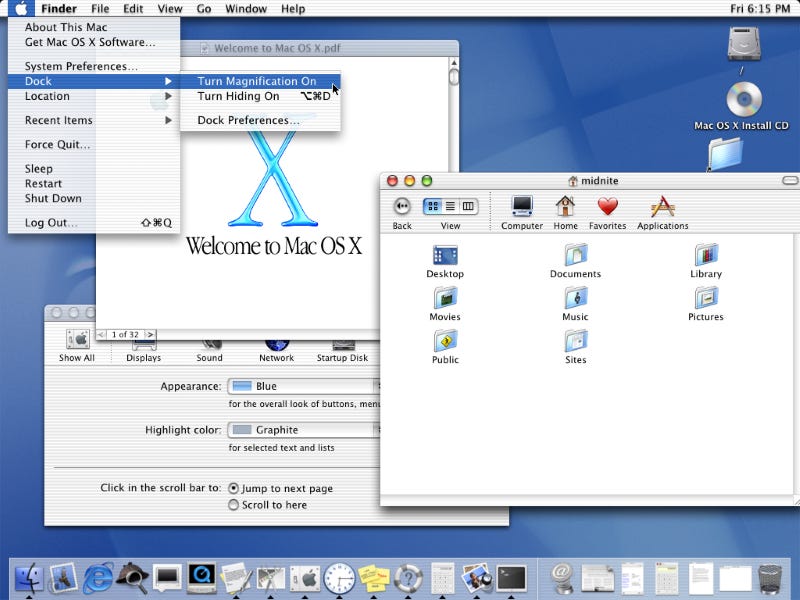
Mac OS X was very different from the Mac OS it replaced. As mentioned earlier, it was Unix-based which meant that it had preemptive multitasking for greatly improved reliability. I’m told that Mac OS would often crash daily during normal use2, because a rogue app could easily take down the entire system. Mac OS X eliminated that problem.
The Unix backbone is what drew me into the Mac world. I had a friend that was a college professor who had stopped by with his PowerBook from the university. He was going on about it and I was not impressed. Then he said: “You don’t understand. It’s Unix!” That really meant a lot to nerds at the time. Unix was the OS of universities and high-end computers and was seriously respected.
Mac OS X also introduced a modernized UI, called Aqua, that gave everything a shiny 3D look to it.
Although Apple was in the beginnings of its comeback then, Macs were not nearly as common as they are now. Windows was everywhere and it was really only preemptive if you were using the business-oriented Windows NT/2000 versions, which few did. The more popular Windows 95/98 versions were only partially preemptive and far less reliable.
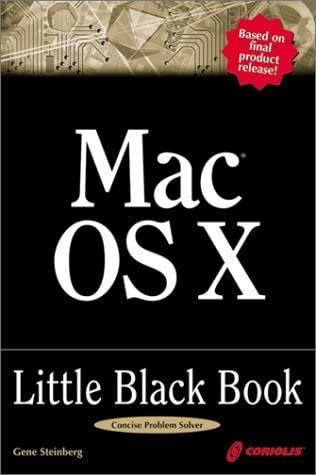
After I realized the Mac OS X was built on Unix, I bought a book about it (back when computer books were a thing) called Mac OS X Little Black Book. I liked what I learned and decided a Mac would be in my future.
I was eager to again use a computer that I really liked. I had switched to PC when I sold my Atari Mega STE in 1995 and never really liked Windows all that much.
However, even though Mac OS X itself shipped in March, Apple did not include it with new Mac purchases. Instead you had to purchase Mac OS X separately for $130 (about $238 in 2026).
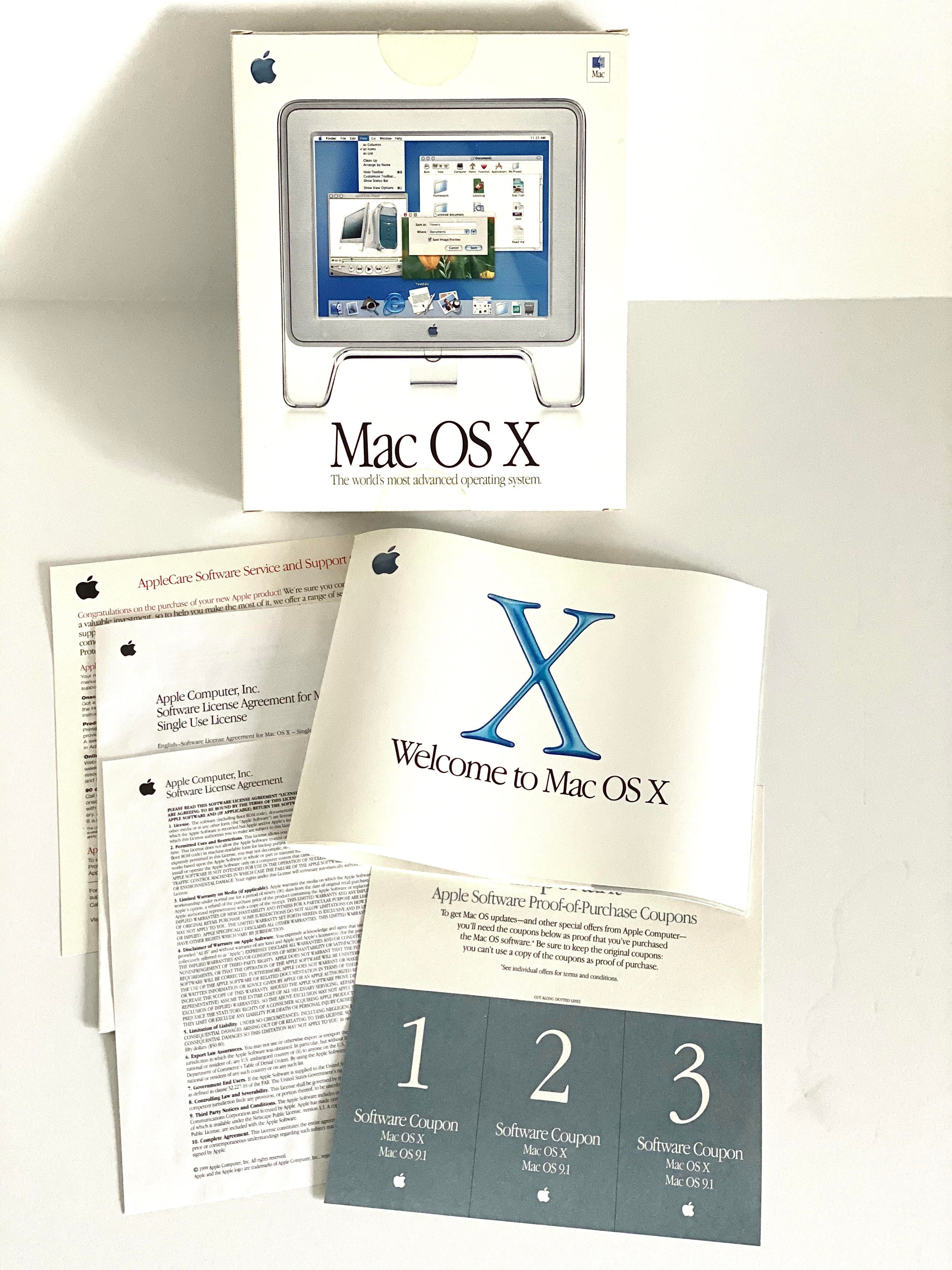
However, a couple months later Apple announced that they would be including Mac OS X with all new Mac purchases. Mac would still boot into Mac OS 9 by default, but you could flip a setting to tell Mac OS X to boot instead. I ordered my first Mac within the week, a PowerMac G4.
I did consider a PowerMac G4 Cube for a hot second, but like everyone else at the time, I realized that even though it looked cool, the Cube was not a good value.
When my Mac arrived, I had to first learn how to use Mac OS 9 enough to tell it to switch to Mac OS X. Once I figured that out, I rarely ever booted back into Mac OS 93.
And there was really no need to, at least for me, because Mac OS X had the ability to to run Mac OS 9 apps from within itself. It did this using Classic mode, which essentially ran Mac OS 9 as a VM within Mac OS X. This was quite a technical achievement and incredibly important for people that already had Mac OS 9 software they relied on.
However, I decided I would just find Mac OS X versions of whatever software I needed to use. This Classic mode was more of a novelty to me.
I remember that there were lots of complaints about Mac OS X at the time. Specifically people often ranted about it being too slow and too incompatible. I suppose both of those were somewhat true, especially if you had already been using a Mac for a while.
Mac OS X was definitely slower than Mac OS 9, but it was also far more stable. And I found that Mac OS X was no slower than something like Windows 2000, which is what I had been using for a while.
I also remember there plenty of limitations. I think the first version of Mac OS X was not able to burn CDs, for example. This was a very common task in 2001, so it certainly annoyed many people. This was quickly remedied in a point release within a couple months, however.
Mac OS X 10.1
Just six months later, in September, Apple released Mac OS X 10.1 which is really the release that made Mac OS X practical for the masses. This was also right around the time that Microsoft Windows XP was released.
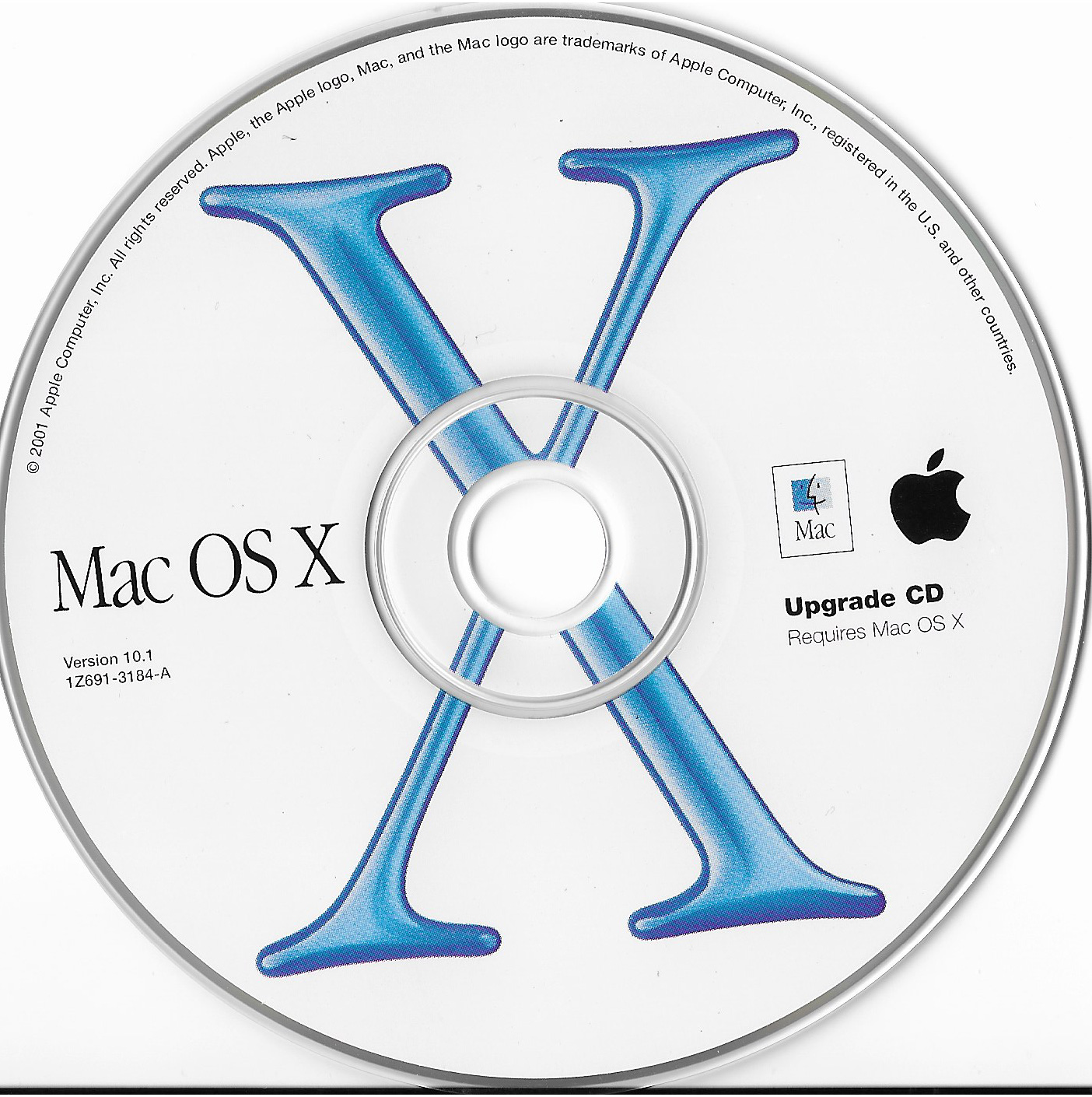
I remember driving 30 minutes to my local Apple dealer (there were no Apple Stores back then) to pick up the free CD upgrade kit. That right, there was no way to download Mac OS X updates yet either!
It’s All Mac OS X
Mac OS X eventually became the OS foundation for all of Apple’s products, most notably the iPhone. It was quite remarkable for the iPhone (released in 2007) to have a rather substantial OS based on Mac OS X. The iPad soon followed and now all of Apple products use an OS that has its origin in the 80s!
When Steve Jobs announced Mac OS X, he said it would be the backbone of Apple software for the next 15-20 years. It’s been longer than that and is still going strong!
Today Mac OS X is just called macOS. The latest version, Tahoe, is not my favorite, but I still prefer macOS over Windows and Linux every day of the week and twice on Sundays, as they say.
Happy Anniversary, Mac OS X!
John Siracusa’s Mac OS X reviews were legendary and required reading back in the day. Here is is writeup about Mac OS X 10.0 on ArsTechnica.

Although to be fair, 25 years is not all that recent even though it doesn’t feel that long ago to me.
At this point, I had only used a Mac a couple times and had no real experience with one.
I only ever used Mac OS 9 to run Connectix Virtual PC with Windows 98, which I needed at the time to check work emails from home.
We were switching our two oldest to a new school in 2001, which was traumatic to them. The oldest, who was about 9, asked if we could get a Mac at home so she could use this drawing program they had at her old school. So we got an iMac G3 - with OS9 that you could upgrade. Well, her drawing program ONLY ran in OS9, so we kept that on there until the kids outgrew the iMac, and then I upgraded the RAM, the OS and used it for iTunes for another 5 years.
Like your experience in leaving the Atari ST world, I made the same sort of decision when I left the Amiga - first moving to the PC. No love there, although hey, Doom was fun!
I made the switch full time with Mac OS X - first with a Dell netbook (great little unauthorized Mac) and haven't looked back - using Mac OS X exclusively as my home go-to, even if work does require a Window 11 PC.
Now I use a Mac mini M4 as my "main" computer (which I'm typing this on), a MacBook Air M1 as my "portable" computer (no plans on upgrading, still running great) and a MacBook Pro core i7 as my MIDI / music computer (expect this to be retired and the MBA M1 to take its place and then I'll get an upgrade).